JAY LOUISE Creative Director · Luxury Beauty
Menu +

Creative Direction

Beauty.
The driving force.

I don’t just create the image. I look at the brand, the consumer, the culture, the product, and the feeling that connects them.

From beauty campaigns and advertising to luxury retail and consumer experience, Jay Louise brings together the creative eye, the consumer perspective, the artist’s hand, and the educator’s mind.

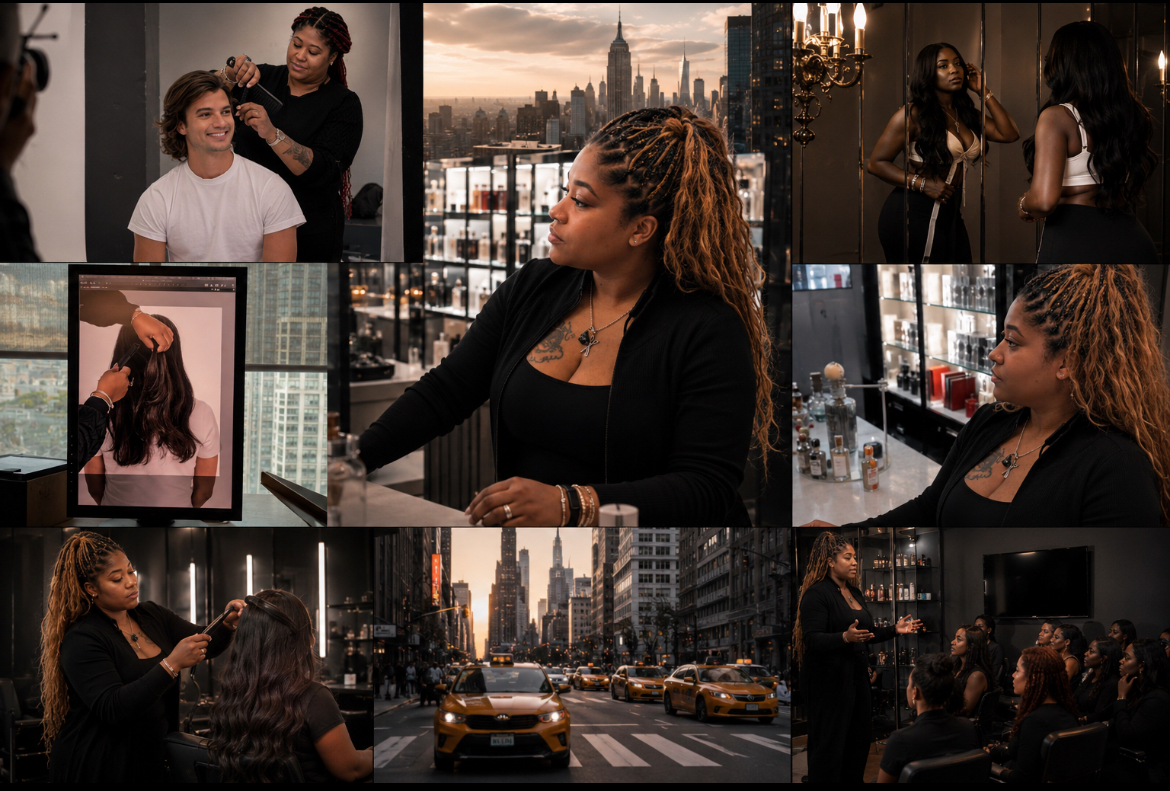
Jay Louise working across beauty campaigns, artistry, and education

Behind the vision

The conversation

An intimate conversation about beauty, image, transformation, and finding her place behind the vision.

Interviewer

Before you became a creative director, where did your eye for beauty begin?

Jay Louise

Honestly? With my grandmother, Louise.

She was the first person who taught me that beauty wasn’t just about looking good. It was about becoming.

My grandmother fought for better opportunities and more prominent roles for people of color during a time when those opportunities were limited. She understood representation. She understood image. And she understood what it meant to walk into a room and be seen differently.

I was seven when I moved in with her. And she had her Essence magazines.

She would literally throw one at me and say something like, “Page 26. Blonde.”

And I knew exactly what she meant. I knew which look she was talking about. I knew which wig I needed to pull out. And I knew what I was supposed to try to recreate.

She would buy the wigs long, and every time a new magazine came out, we’d have a new look.

By nine years old, I was cutting her wigs.

Interviewer

You were nine and already cutting wigs?

Jay Louise

Yes. And let me tell you—I messed up a lot.

But that’s where I learned.

I wasn’t sitting there thinking about becoming a hairstylist. I was looking at a photograph and trying to figure out how to make that image live on a completely different person.

I’d cut an angle wrong and have to figure out how to fix it. I’d look at the shape. The proportions. Where the hair fell around her face. What made the woman in the photograph look like that woman.

I was learning angles by making mistakes. And without realizing it, I was learning something much bigger:

“Beauty isn’t about transforming someone into something they’re not. It’s about expressing what is already there.”

Interviewer

What did you learn from watching your grandmother transform herself?

Jay Louise

I learned that beauty isn’t really about transformation. It’s about expression.

The way a person feels inside themselves can be reflected outwardly through their image.

If I feel wealthy today, I may not be wealthy today—but I damn sure will look like it.

If I’m feeling powerful, I want my image to communicate that before I ever say a word.

And sometimes it’s the opposite. Maybe I’m feeling shy. Maybe I’m intimidated. Maybe I don’t want to be completely seen that day. You might find me wanting to hide behind a bang.

That’s beauty to me.

I’m not interested in imposing an image on someone. I’m interested in understanding who they already are, how they want to feel, and what they want the world to see.

Then I reflect it. And I enhance it.

Interviewer

So you’re not really transforming people. You’re translating them?

Jay Louise

Exactly.

“I translate what is already there.”

That’s what I think I was learning as a little girl with my grandmother’s wigs.

I didn’t have the vocabulary for it then, but I was learning how to look at a person, look at an image, and understand the space between the two.

What needs to be emphasized? What needs to be softened? What should be seen? What should be left understated?

And most importantly—how does this person want to show up in the world?

That’s where my artistry begins.

Interviewer

Was that when you knew you wanted to work in beauty?

Jay Louise

Not exactly.

I grew up around the performing arts, and ironically, I hated the spotlight.

What fascinated me was everything happening behind it. The people who took an ordinary person and transformed them into a character.

Hair. Makeup. Wardrobe. Lighting. The story.

The entire world that existed before the camera ever turned on.

That’s what I wanted.

When I went to cosmetology school, my intention was never to simply stand behind the chair. I wanted to understand the world behind the image.

Interviewer

So how did you make the leap from cosmetology to production?

Jay Louise

About a year after receiving my cosmetology license, I started emailing almost every production company I could find in New York City. I was determined to get onto a set.

Eventually, something hit.

Atlantic Coast Media Group reached out to me to work on Kerenique’s clinical trials, including before-and-after photography and testimonials.

It was supposed to be a two-day call. It turned into almost a year. Five days a week.

Then I began crossing over into other brands under their umbrella. I left the Midtown salon where I had been working, and suddenly I was on my way into campaigns.

“This was my world.”

Interviewer

What did you love about being behind the scenes?

Jay Louise

I loved being part of the transformation without needing to be the person being transformed.

I had spent my childhood watching my grandmother become whoever she wanted to be through a wig, makeup, clothing, and confidence. Now I was helping create those transformations for other people.

But I wasn’t interested in being the character. I wanted to help create the character.

That’s when I realized I had found my place.

“Behind the vision.”

15 years of campaigns

The platforms changed.
The psychology didn’t.

Interviewer

You’ve now spent about 15 years working in beauty advertising and campaigns. What has kept that career going?

Jay Louise

Word of mouth. That’s really what carried me.

One job became another. One brand became another. One person remembered me and brought me onto something else.

I’ve watched beauty advertising completely evolve during those years.

I’ve worked on television commercials, in-store signage, print, digital campaigns, social media, Instagram, YouTube, Amazon, and direct-to-consumer brand platforms.

The platforms changed. The psychology didn’t.

People still want to see themselves in the story. They still want to understand what a product is going to do for them. They still want to feel something.

Interviewer

And you continued working behind the chair throughout all of this?

Jay Louise

Absolutely. I’ve never really separated the worlds.

I’ve continued working behind the chair, educating, and maintaining a relationship with the consumer and the beauty professional.

And when you’re in production, you learn quickly that there is an ebb and flow. Campaign work isn’t always consistent.

So when things slowed down, I went back to the floor. I went back behind the chair. I stayed connected to retail.

“They were my education.”

Retail taught me how consumers think. Behind the chair taught me how people experience beauty personally. Education taught me how to communicate technique and build confidence. Production taught me how to translate beauty into an image and a story. And campaigns taught me how all of those pieces work together.

The campaign philosophy

The product delivers the result.
The campaign should make you want the feeling.

Interviewer

How do you use everything you’ve learned to create a campaign for a brand?

Jay Louise

I replace the individual with the brand.

The same way I look at a person and ask, “Who are you? How do you want to be seen? What do you want people to feel when they encounter you?”—I ask those same questions of a brand.

I start with the brand identity.

Who are they? Who are they speaking to? What does that consumer respond to? What’s happening culturally? What’s trending? And more importantly, what’s actually relevant to their audience?

Then I look at what’s already being done.

Working in retail has given me a really valuable gauge for that. I’m not just looking at campaigns from the outside.

I’ve stood on the sales floor and watched consumers interact with the product, listened to what they ask for, what catches their attention, what makes them stop, and what ultimately makes them buy.

“What’s missing?”

Because sometimes you don’t need to completely reinvent the wheel. Sometimes there’s a gap. And what’s sitting in that gap is all you need to make people stop.

Interviewer

What does finding that gap look like creatively?

Jay Louise

It can be anything.

Color. Sound. Texture. Movement. A layered effect. The way light hits something. The unexpected juxtaposition of two things that normally wouldn’t exist together.

I’m constantly paying attention to what creates a mood.

Because before someone understands what you’re selling, they feel something.

And that’s where I think great beauty campaigns begin.

I want the visual to make you feel before it asks you to understand.

Interviewer

So where does the product itself come into that?

Jay Louise

That’s the part I never want to lose.

Beauty can be incredibly emotional, but ultimately the product has a job to do.

So I ask: What problem does this product solve? What is the consumer struggling with? What do they want to change? What does the product give them that they didn’t have before?

And then the question that really matters:

“How do they feel when the job is done?”

That’s the campaign. Not just the product. The feeling on the other side of the product.

If the product smooths the hair, I’m not just selling smooth hair. I’m asking what smooth hair makes that person feel.

If it’s skincare, maybe it’s not just hydrated skin. Maybe it’s confidence walking out without makeup.

If it’s fragrance, maybe it’s not just a scent. Maybe it’s presence. Seduction. Power. Freedom. Memory.

The product delivers the result. The campaign should make you want the feeling.

Interviewer

And where do you see yourself in that process?

Jay Louise

I’m the person connecting all of those pieces.

The brand. The consumer. The product. The culture. The visual. The feeling. And the business.

I’m not interested in creating something beautiful just because it’s beautiful.

I want to know why it should exist, who it’s speaking to, what it’s saying, and why someone should care.

That’s where my creative direction lives.

The Jay Louise Creative Lens

I don’t just look at the picture.
I look at everything around it.

The Creative Eye

I understand how beauty should look, feel, and communicate.

The Consumer Eye

Years on the luxury retail floor taught me what makes people stop, connect, trust, and buy.

The Artist’s Hand

Behind the chair and on set, I know how to translate an idea into the finished image.

The Educator’s Mind

I turn experience into knowledge that empowers other beauty professionals.

The approach

See the gap. Understand the audience.
Create the feeling.

01

Understand the brand

Brand identity · positioning · audience · cultural relevance

02

Read the consumer

Behavior · desire · pain points · purchase motivation

03

Find the gap

What’s missing? What’s overdone? What would make them stop?

04

Build the feeling

Color · sound · texture · movement · atmosphere · visual storytelling

05

Connect the why

Tie the creative back to the product, its purpose, and the consumer’s desired outcome.

Interviewer

If you could tell that nine-year-old girl cutting her grandmother’s wig one thing today, what would it be?

Jay Louise

I’d tell her...

“Keep cutting.”

Because you have no idea where that little mistake is going to take you.

You think you’re just trying to recreate something you saw in a magazine. But you’re actually learning how to see.

You’re learning how to translate. You’re learning how an image can reflect how somebody feels inside.

And one day, you’re going to realize you weren’t just cutting wigs.

“You were learning to create the vision.”

Creative direction · Campaign development · Beauty strategy

Ready to create something people feel?

Creative direction, campaign development, beauty strategy, visual storytelling, and brand perspective for beauty brands, retailers, and businesses ready to stand out.